Monday, 24 July 2023

Draft Tube


 The Draft Tube is a connecting pipe that is normally installed at the turbine’s outlet or exhaust, and it transfers the water’s kinetic energy to static pressure at the turbine’s output. This prevents the kinetic energy of the water flowing through the turbines’ output from dissipating. It’s often found in power turbines including reaction turbines, Kaplan turbines, and Francis turbines. A draft tube is an important product of employing industrial tools. Draft tubes are provided by several suppliers and companies, different Manufacturers, and a lot of distributors and there are a lot of  Draft Tubes for Sale on Linquip.

There is a complete list of draft tube services on the Linquip website that meets all of your needs. Linquip can connect you with a number of draft tube service providers and experts who can help you. Linquip offers a team of  Draft Tube Specialists and subject matter experts available to help you test your equipment.

What is a Draft Tube?

A draft tube is a type of tube that connects the exit of the water turbine to the tailrace. The tailrace is the water channel that takes the water out of the turbine. It is usually located at the outlet or exit of the turbines and converts the kinetic energy of the water at the outlet of the turbine to static pressure. The materials used to create a draft tube are cast steel and cemented concrete.

What is the Purpose of the draft tube?

The principal purpose of the draft tube is to convert water kinetic energy into pressure energy. To decrease the velocity of the water and to raise the pressure of the water before joining the tailrace, the pipe is used to steadily increase the cross-sectional area. The draft tube raises the water pressure to the atmospheric pressure. To tolerate the high pressure and speed of the water, the tube must be strong enough.

draft tube

Types of Draft Tube

Various forms of draft tubes are available. There are mainly 4 types of draft tube, and those are:

Conical draft tube

Simple elbow draft tube

Moody spreading draft tube

Elbow draft tube with a varying cross-section

conical draft tube

In this type of draft tube form, the flow direction is straight and divergent. This tube style is made of mild steel plates. It is tapered in shape and the outlet diameter is greater than the inlet diameter of the draft tube. The tapered angle of the draft tube should not be too wide to induce a divergence of the flow from the wall of the draft tube. This angle should also not be too short, since it would require a longer draft tube that brings a substantial loss of kinetic energy. So, the angle of the taper is still almost 10 degrees.

Simple Elbow Draft Tube:

The shape of the tube is like an elbow in a simple Elbow draft Tube. It is used in the Kaplan turbine. In this type of draft tube, the cross-section area remains the same for the entire length of the draft tube. The inlet and outlet of the draft tube are circular. This draft tube is used at low head positions and the turbine is to be mounted next to the tailrace. It helps to minimize the expense of drilling and the exit diameter should be as wide as possible to recover kinetic energy at the runner outlet. This tube has a moderate efficiency of around 60%.

moody draft tube

The outlet of the draft tube is split into two sections in this form of the draft tube. Moody draft tube is similar to a conical draft tube and is with a central core component that divides the outlet into two parts. There are one inlet and two exits for the draft tube. The main aim of this type of draft tube is to reduce the swirling motion of water. The efficiency of this type of tube design is almost 88%.

Elbow draft tube with varying cross-section:

An elbow draft tube with varying cross-section is an improvement of a simple elbow draft. The inlet is circular and the outlet is rectangular in this type. In general, the horizontal section of the draft tube is inclined up to avoid air from approaching the exit area. This type of tube varies in its cross-section from inlet to outlet. The outlet is still beneath the tailrace. The performance of this type of draft tube is used with the Kaplan Turbine at about 70%.

draft tube function

The primary function of the draft tube is to control the flow of water. The turbine has a tailrace. The turbine is attached to this tailrace by the tube, causing the turbine to be beyond the water but still have access to the water. It requires the negative head to be formed at the outlet of the runner and hence raises the net head of the turbine. The turbine can be mounted above the tailrace without any lack of net head and thus the turbine may be adequately inspected.

Moreover, it transforms a significant portion of the kinetic energy wasted at the outlet of the turbine into usable pressure energy. Without a draft tube, the kinetic energy rejected at the outlet of the turbine would be lost to the tailrace. The draft tube stops the water from splashing out of the runner and leads the water to the tailrace.

Advantages of Draft Tube

Some of the advantages of using the draft tube are:

Using the draft tube prevents the splashing of water from the runner and leads the water to the tailrace.

The net turbine head is raised as the height is increased between the turbine exit and the tailrace because of the use of the draft tube.

The use of a draft tube greatly decreases the amount of kinetic energy required at the tailrace.

The transfer of kinetic energy into pressure energy results in a negative pressure head at the outlet of the turbine, which serves to improve the total performance of the turbine.

Draft Tube efficiency

The efficiency of the draft tube is the ratio of kinetic power transfer to the kinetic energy available at the inlet to the draft tube. The efficiency of a tube depends on how much of the kinetic energy of the water is converted into pressure energy. The more energy is converted, the more efficient the draft tube can be.

draft tube in Kaplan and Francis turbines?

In the case of Kaplan and Francis turbines (reaction turbines), the head usable at the turbine inlet is usually low, so the turbine is far closer to the tailrace to achieve the full head. As much of the water’s pressure energy is converted into the Turbine’s mechanical energy, the pressure at the outlet is lower than the atmospheric pressure. Therefore, if water pressure is less than the atmospheric pressure at the exit of the turbine, then it induces the tail rushing water back into the turbine.

Today, the elevated pressure of water is significantly greater than the atmospheric pressure. It solves the dilemma of the water backflow from the tail to the turbine outlet. It should be noted that the water flow back will do significant damage to the turbine which can interrupt the turbine from working.

Final words

That was all about the draft tube. Within this blog post, we mentioned the main points about the draft tube-like its purpose, the types as well as the merits. If you like this post or have any idea about the draft tube, please register at Linquip and let us know in your comments. Feel free to ask your questions in the comment as well. And don’t forget to share this post, help more people learn about the draft tube.

Hysteresis


 Hysteresis is the dependence of the state of a system on its history. For example, a magnet may have more than one possible magnetic moment in a given magnetic field, depending on how the field changed in the past. Plots of a single component of the moment often form a loop or hysteresis curve, where there are different values of one variable depending on the direction of change of another variable. This history dependence is the basis of memory in a hard disk drive and the remanence that retains a record of the Earth's magnetic field magnitude in the past. Hysteresis occurs in ferromagnetic and ferroelectric materials, as well as in the deformation of rubber bands and shape-memory alloys and many other natural phenomena. In natural systems it is often associated with irreversible thermodynamic change such as phase transitions and with internal friction; and dissipation is a common side effect.

Hysteresis can be found in physics, chemistry, engineering, biology, and economics. It is incorporated in many artificial systems: for example, in thermostats and Schmitt triggers, it prevents unwanted frequent switching.

Hysteresis can be a dynamic lag between an input and an output that disappears if the input is varied more slowly; this is known as rate-dependent hysteresis. However, phenomena such as the magnetic hysteresis loops are mainly rate-independent, which makes a durable memory possible.

Systems with hysteresis are nonlinear, and can be mathematically challenging to model. Some hysteretic models, such as the Preisach model (originally applied to ferromagnetism) and the Bouc–Wen model, attempt to capture general features of hysteresis; and there are also phenomenological models for particular phenomena such as the Jiles–Atherton model for ferromagnetism.

It is difficult to define hysteresis precisely. Isaak D. Mayergoyz wrote "..the very meaning of hysteresis varies from one area to another, from paper to paper and from author to author. As a result, a stringent mathematical definition of hysteresis is needed in order to avoid confusion and ambiguity

tymology and history

The term "hysteresis" is derived from ὑστέρησις, an Ancient Greek word meaning "deficiency" or "lagging behind". It was coined in 1881 by Sir James Alfred Ewing to describe the behaviour of magnetic materials.

Some early work on describing hysteresis in mechanical systems was performed by James Clerk Maxwell. Subsequently, hysteretic models have received significant attention in the works of Ferenc Preisach (Preisach model of hysteresis), Louis Néel and Douglas Hugh Everett in connection with magnetism and absorption. A more formal mathematical theory of systems with hysteresis was developed in the 1970s by a group of Russian mathematicians led by Mark Krasnosel'skii.

Types

Rate-dependent

One type of hysteresis is a lag between input and output. An example is a sinusoidal input X(t) that results in a sinusoidal output Y(t), but with a phase lag φ:

 it is mathematically equivalent to a transfer function in linear filter theory and analogue signal processing.

This kind of hysteresis is often referred to as rate-dependent hysteresis. If the input is reduced to zero, the output continues to respond for a finite time. This constitutes a memory of the past, but a limited one because it disappears as the output decays to zero. The phase lag depends on the frequency of the input, and goes to zero as the frequency decreases.

When rate-dependent hysteresis is due to dissipative effects like friction, it is associated with power loss.

Rate-independent

Systems with rate-independent hysteresis have a persistent memory of the past that remains after the transients have died out. The future development of such a system depends on the history of states visited, but does not fade as the events recede into the past. If an input variable X(t) cycles from X0 to X1 and back again, the output Y(t) may be Y0 initially but a different value Y2 upon return. The values of Y(t) depend on the path of values that X(t) passes through but not on the speed at which it traverses the path. Many authors restrict the term hysteresis to mean only rate-independent hysteresis.Hysteresis effects can be characterized using the Preisach model and the generalized Prandtl−Ishlinskii model.

Control systems

In control systems, hysteresis can be used to filter signals so that the output reacts less rapidly than it otherwise would by taking recent system history into account. For example, a thermostat controlling a heater may switch the heater on when the temperature drops below A, but not turn it off until the temperature rises above B. (For instance, if one wishes to maintain a temperature of 20 °C then one might set the thermostat to turn the heater on when the temperature drops to below 18 °C and off when the temperature exceeds 22 °C).

Similarly, a pressure switch can be designed to exhibit hysteresis, with pressure set-points substituted for temperature thresholds.

Electronic circuits

Often, some amount of hysteresis is intentionally added to an electronic circuit to prevent unwanted rapid switching. This and similar techniques are used to compensate for contact bounce in switches, or noise in an electrical signal.

A Schmitt trigger is a simple electronic circuit that exhibits this property.

A latching relay uses a solenoid to actuate a ratcheting mechanism that keeps the relay closed even if power to the relay is terminated.

Hysteresis is essential to the workings of some memristors (circuit components which "remember" changes in the current passing through them by changing their resistance).

Hysteresis can be used when connecting arrays of elements such as nanoelectronics, electrochrome cells and memory effect devices using passive matrix addressing. Shortcuts are made between adjacent components (see crosstalk) and the hysteresis helps to keep the components in a particular state while the other components change states. Thus, all rows can be addressed at the same time instead of individually.

In the field of audio electronics, a noise gate often implements hysteresis intentionally to prevent the gate from "chattering" when signals close to its threshold are applied

User interface design

A hysteresis is sometimes intentionally added to computer algorithms. The field of user interface design has borrowed the term hysteresis to refer to times when the state of the user interface intentionally lags behind the apparent user input. For example, a menu that was drawn in response to a mouse-over event may remain on-screen for a brief moment after the mouse has moved out of the trigger region and the menu region. This allows the user to move the mouse directly to an item on the menu, even if part of that direct mouse path is outside of both the trigger region and the menu region. For instance, right-clicking on the desktop in most Windows interfaces will create a menu that exhibits this behavior.

Aerodynamics

In aerodynamics, hysteresis can be observed when decreasing the angle of attack of a wing after stall, regarding the lift and drag coefficients. The angle of attack at which the flow on top of the wing reattaches is generally lower than the angle of attack at which the flow separates during the increase of the angle of attack.

Backlash

Moving parts within machines, such as the components of a gear train, normally have a small gap between them, to allow movement and lubrication. As a consequence of this gap, any reversal in direction of a drive part will not be passed on immediately to the driven part.This unwanted delay is normally kept as small as practicable, and is usually called backlash. The amount of backlash will increase with time as the surfaces of moving parts wear.

Elastic hysteresis

In the elastic hysteresis of rubber, the area in the centre of a hysteresis loop is the energy dissipated due to material internal friction.

Elastic hysteresis was one of the first types of hysteresis to be examined.

The effect can be demonstrated using a rubber band with weights attached to it. If the top of a rubber band is hung on a hook and small weights are attached to the bottom of the band one at a time, it will stretch and get longer. As more weights are loaded onto it, the band will continue to stretch because the force the weights are exerting on the band is increasing. When each weight is taken off, or unloaded, the band will contract as the force is reduced. As the weights are taken off, each weight that produced a specific length as it was loaded onto the band now contracts less, resulting in a slightly longer length as it is unloaded. This is because the band does not obey Hooke's law perfectly. The hysteresis loop of an idealized rubber band is shown in the figure.

In terms of force, the rubber band was harder to stretch when it was being loaded than when it was being unloaded. In terms of time, when the band is unloaded, the effect (the length) lagged behind the cause (the force of the weights) because the length has not yet reached the value it had for the same weight during the loading part of the cycle. In terms of energy, more energy was required during the loading than the unloading, the excess energy being dissipated as thermal energy.

Elastic hysteresis is more pronounced when the loading and unloading is done quickly than when it is done slowly. Some materials such as hard metals don't show elastic hysteresis under a moderate load, whereas other hard materials like granite and marble do. Materials such as rubber exhibit a high degree of elastic hysteresis.

When the intrinsic hysteresis of rubber is being measured, the material can be considered to behave like a gas. When a rubber band is stretched it heats up, and if it is suddenly released, it cools down perceptibly. These effects correspond to a large hysteresis from the thermal exchange with the environment and a smaller hysteresis due to internal friction within the rubber. This proper, intrinsic hysteresis can be measured only if the rubber band is thermally isolated.

Small vehicle suspensions using rubber (or other elastomers) can achieve the dual function of springing and damping because rubber, unlike metal springs, has pronounced hysteresis and does not return all the absorbed compression energy on the rebound. Mountain bikes have made use of elastomer suspension, as did the original Mini car.

The primary cause of rolling resistance when a body (such as a ball, tire, or wheel) rolls on a surface is hysteresis. This is attributed to the viscoelastic characteristics of the material of the rolling body.

Contact angle hysteresis

The contact angle formed between a liquid and solid phase will exhibit a range of contact angles that are possible. There are two common methods for measuring this range of contact angles. The first method is referred to as the tilting base method. Once a drop is dispensed on the surface with the surface level, the surface is then tilted from 0° to 90°. As the drop is tilted, the downhill side will be in a state of imminent wetting while the uphill side will be in a state of imminent dewetting. As the tilt increases the downhill contact angle will increase and represents the advancing contact angle while the uphill side will decrease; this is the receding contact angle. The values for these angles just prior to the drop releasing will typically represent the advancing and receding contact angles. The difference between these two angles is the contact angle hysteresis.

The second method is often referred to as the add/remove volume method. When the maximum liquid volume is removed from the drop without the interfacial area decreasing the receding contact angle is thus measured. When volume is added to the maximum before the interfacial area increases, this is the advancing contact angle. As with the tilt method, the difference between the advancing and receding contact angles is the contact angle hysteresis. Most researchers prefer the tilt method; the add/remove method requires that a tip or needle stay embedded in the drop which can affect the accuracy of the values, especially the receding contact angle.

Bubble shape hysteresis

The equilibrium shapes of bubbles expanding and contracting on capillaries (blunt needles) can exhibit hysteresis depending on the relative magnitude of the maximum capillary pressure to ambient pressure, and the relative magnitude of the bubble volume at the maximum capillary pressure to the dead volume in the system. The bubble shape hysteresis is a consequence of gas compressibility, which causes the bubbles to behave differently across expansion and contraction. During expansion, bubbles undergo large non equilibrium jumps in volume, while during contraction the bubbles are more stable and undergo a relatively smaller jump in volume resulting in an asymmetry across expansion and contraction. The bubble shape hysteresis is qualitatively similar to the adsorption hysteresis, and as in the contact angle hysteresis, the interfacial properties play an important role in bubble shape hysteresis.

The existence of the bubble shape hysteresis has important consequences in interfacial rheology experiments involving bubbles. As a result of the hysteresis, not all sizes of the bubbles can be formed on a capillary. Further the gas compressibility causing the hysteresis leads to unintended complications in the phase relation between the applied changes in interfacial area to the expected interfacial stresses. These difficulties can be avoided by designing experimental systems to avoid the bubble shape hysteresis.

Adsorption hysteresis

Hysteresis can also occur during physical adsorption processes. In this type of hysteresis, the quantity adsorbed is different when gas is being added than it is when being removed. The specific causes of adsorption hysteresis are still an active area of research, but it is linked to differences in the nucleation and evaporation mechanisms inside mesopores. These mechanisms are further complicated by effects such as cavitation and pore blocking.

In physical adsorption, hysteresis is evidence of mesoporosity-indeed, the definition of mesopores (2–50 nm) is associated with the appearance (50 nm) and disappearance (2 nm) of mesoporosity in nitrogen adsorption isotherms as a function of Kelvin radius. An adsorption isotherm showing hysteresis is said to be of Type IV (for a wetting adsorbate) or Type V (for a non-wetting adsorbate), and hysteresis loops themselves are classified according to how symmetric the loop is. Adsorption hysteresis loops also have the unusual property that it is possible to scan within a hysteresis loop by reversing the direction of adsorption while on a point on the loop. The resulting scans are called "crossing," "converging," or "returning," depending on the shape of the isotherm at this point.

Matric potential hysteresis

The relationship between matric water potential and water content is the basis of the water retention curve. Matric potential measurements (Ψm) are converted to volumetric water content (θ) measurements based on a site or soil specific calibration curve. Hysteresis is a source of water content measurement error. Matric potential hysteresis arises from differences in wetting behaviour causing dry medium to re-wet; that is, it depends on the saturation history of the porous medium. Hysteretic behaviour means that, for example, at a matric potential (Ψm) of 5 kPa, the volumetric water content (θ) of a fine sandy soil matrix could be anything between 8% and 25%.

Tensiometers are directly influenced by this type of hysteresis. Two other types of sensors used to measure soil water matric potential are also influenced by hysteresis effects within the sensor itself. Resistance blocks, both nylon and gypsum based, measure matric potential as a function of electrical resistance. The relation between the sensor's electrical resistance and sensor matric potential is hysteretic. Thermocouples measure matric potential as a function of heat dissipation. Hysteresis occurs because measured heat dissipation depends on sensor water content, and the sensor water content–matric potential relationship is hysteretic. As of 2002, only desorption curves are usually measured during calibration of soil moisture sensors. Despite the fact that it can be a source of significant error, the sensor specific effect of hysteresis is generally ignored.

Working at the Nanoscale


Nanotechnology is more than just mixing nanoscale materials together; it requires the ability to understand and to precisely manipulate and control those materials in a useful way.

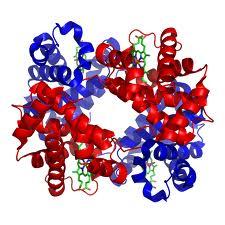
Hemoglobin cartoon depiction


Nanotechnology involves a new and broad science where diverse fields such as physics, chemistry, biology, materials science, and engineering converge at the nanoscale.

It is also important to understand that nanoscale materials are found in nature. For instance, hemoglobin, the oxygen-transporting protein found in red blood cells, is 5.5 nanometers in diameter. Naturally occurring nanomaterials exist all around us, such as in smoke from fire, volcanic ash, and sea spray. Some nanomaterials are a byproduct of human activity, such as bus and automobile exhaust and welding fumes.

You may recall from the Size of the Nanoscale page that the nanoscale is about 1 to 100 nanometers. Working at the nanoscale requires an understanding of the various types and dimensions of nanoscale materials. Different types of nanomaterials are named for their individual shapes and dimensions. Think of these simply as particles, tubes, wires, films, flakes, or shells that have one or more nanometer-sized dimension. For example, carbon nanotubes have a diameter in the nanoscale, but can be several hundred nanometers long or even longer. Nanofilms or nanoplates have a thickness in the nanoscale, but their other two dimensions can be much larger.

The key is to be able to both see and manipulate nanomaterials in order to take advantage of their special properties. As mentioned earlier, the invention of special microscopes gave scientists the ability to work at the nanoscale. The first of these new discoveries was the scanning tunneling microscope. While it’s mainly designed to measure objects, it can also move tiny objects such as carbon nanotubes.

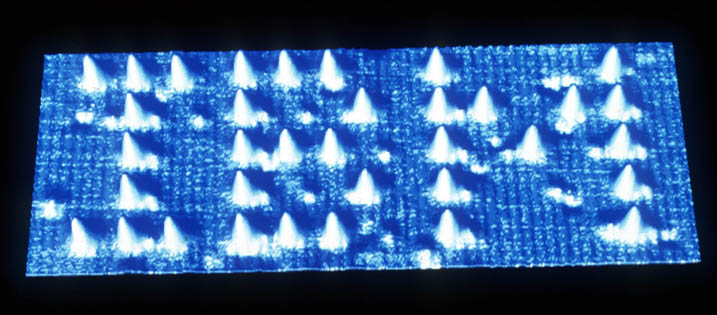
Xenon-IBM image written with 35 xenon atoms

The earliest example of this type of process was accomplished by IBM on November 11, 1989, when researcher Don Eigler and colleagues spelled the company logo in atoms. He and his team were able to literally move 35 xenon atoms on a background of copper atoms to spell out IBM.

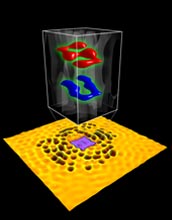
More recently a team of Stanford University researchers led by Hari Manoharan were able to encode 35 bits of information per electron and write letters so small they are composed of subatomic bits of matter only 0.3 nanometers wide, or roughly one third of a billionth of a meter. In other words, they beat the record set by IBM, writing Stanford’s initials in letters smaller than atoms. These exercises demonstrated the precision with which it is possible to manipulate matter.


Artist's rendering of "SU" written in letters smaller than individual atoms.

Today, research scientists in universities and companies around the world are manufacturing nanomaterials to make new products and applications, from medical devices and drugs that may treat disease, to strong and lightweight materials that reduce fuel costs for cars and planes. For more information about these discoveries and inventions, see Benefits and Applications here on the Nano.gov website.

Nanotechnology


Nanotechnology refers to the branch of science and engineering devoted to designing, producing, and using structures, devices, and systems by manipulating atoms and molecules at nanoscale, i.e. having one or more dimensions of the order of 100 nanometres (100 millionth of a millimetre) or less.

In the natural world, there are many examples of structures with one or more nanometre dimensions, and many technologies have incidentally involved such nanostructures for many years, but only recently has it been possible to do it intentionally.

Many of the applications of nanotechnology involve new materials that have very different properties and new effects compared to the same materials made at larger sizes. This is due to the very high surface to volume ratio of nanoparticles compared to larger particles, and to effects that appear at that small scale but are not observed at larger scales.

The applications of nanotechnology can be very beneficial and have the potential to make a significant impact on society. Nanotechnology has already been embraced by industrial sectors, such as the information and communications sectors, but is also used in food technology, energy technology, as well as in some medical products and medicines. Nanomaterials may also offer new opportunities for the reduction of environmental pollution.

But these new materials may also present new health risks. Humans have developed mechanisms of protection against various environmental agents of different sizes. However, until recently, they had never been exposed to synthetic nanoparticles and their specific characteristics. Therefore the normal human defence mechanisms associated with, for example, immune and inflammatory systems may well not be able to respond adequately to these nanoparticles. In addition, nanoparticles may also disperse and persist in the environment, and therefore have an impact on the environment.

As far as health risks are concerned, there are two types of nanostructure to consider:those where the structure itself is a free particle, called free nanoparticles, which is the group of greater concern; and

those where the nanostructure is an integral part of a larger object, for instance, materials with coatings composed of nanomaterials. However, as long as the nanoparticles are fixed to the carrier, there is no reason to suppose that they pose a greater risk for health or the environment than the larger scale materials.

Wherever the potential for an entirely new risk is identified, it is necessary to carry out an extensive analysis of the nature of the risk, which can then, if necessary, be used in the processes of risk management. It is widely accepted that the risks associated with nanotechnology need to be analysed in this way. Many international organisations ( e.g. Asia Pacific Nanotechnology Forum 2005), governmental bodies within the European Union (European Commission 2004,), National Institutions (e.g. De Jong et al 2005, Roszek et al 2005, US National Science and Technology Council 2004, IEEE 2004, US National Institute of Environmental Health Sciences 2004), non-governmental organisations (e.g.UN-NGLS 2005), learned institutions and societies (e.g. Institute of Nanotechnology 2005, Australian Academy of Sciences 2005, METI 2005, UK Royal Society and Royal Academy of Engineering 2004) and individuals (e.g. Oberdörster et al 2005, Donaldson and Stone 2003) have published reports on the current state of nanotechnology, and most draw attention to this need for a thorough risk analysis.

The European Council has highlighted the need to pay special attention to the potential risks throughout the life cycle of nanotechnology based products and the European Commission has signalled its intention to work on an international basis towards establishing a framework of shared principles for the safe, sustainable, responsible and socially acceptable use of nanotechnologies.


3.2 Definitions and Scope

There are several definitions of nanotechnology and of the products of nanotechnology, often these been generated for specific purposes.

In this Opinion, the underlying scientific concepts of nanotechnology have been considered more important than the semantics of a definition, so these are considered first. The Committee considers that the scope of nanoscience and nanotechnology used by the UK Royal Society and Royal Academy of Engineering in their 2004 report (Royal Society and Royal Academy of Engineering 2004) adequately expresses these concepts. This suggests that the range of the nanoscale is from the atomic level, at around 0.2 nm up to around 100nm. It is within this range that materials can have substantially different properties compared to the same substances at larger sizes, both because of the substantially increased ratio of surface area to mass, and also because quantum effects begin to play a role at these dimensions, leading to significant changes in several types of physical property.

The present Opinion uses the various terms of nanotechnology in a manner consistent with the recently published Publicly Available Specification on the Vocabulary for Nanoparticles of the British Standards Institution (BSI 2005), in which the following definitions for the major general terms are proposed:

Nanoscale: having one or more dimensions of the order of 100 nm or less.

Nanoscience: the study of phenomena and manipulation of materials at atomic, molecular and macromolecular scales, where properties differ significantly from those at a larger scale.

Nanotechnology: the design, characterization, production and application of structures, devices and systems by controlling shape and size at the nanoscale.

Nanomaterial: material with one or more external dimensions, or an internal structure, which could exhibit novel characteristics compared to the same material without nanoscale features.

Nanoparticle: particle with one or more dimensions at the nanoscale. (Note: In the present report, nanoparticles are considered to have two or more dimensions at the nanoscale).

Nanocomposite: composite in which at least one of the phases has at least one dimension on the nanoscale.

Nanostructured: having a structure at the nanoscale.

It should be noted that nanoscience and nanotechnology have been emerging rapidly during recent years, and that the vocabulary used within the contributing disciplines has not been consistent during this time. Also, as this report notes, there have been, and continue to be, serious difficulties with the precise measurement of the parameters of the nanoscale, such that it is not always possible to have complete confidence in the data and conclusions drawn about specific phenomena relating to specific features of nanostructures and nanomaterials. This Opinion recognises the inevitability of this situation and has drawn some general conclusions in the knowledge that the literature may contain inconsistencies and inaccuracies. Whilst, therefore, this Opinion uses the definition that nanoscale should now be considered to involve dimensions up to 100 nm, it recognises that some of the literature will have represented nanoscale as having larger dimensions than 100 nm. Much of the literature related to particles, especially that concerned with aerosols, air pollution and inhalation toxicology, has referred to particles as either ultrafine, fine or conventional. This report has assumed that, unless otherwise stated, ‘ultrafine particles’ are essentially equivalent to nanoparticles.

Also, in relation to nanoparticles, it must be borne in mind that a sample of a substance that contains nanoparticles will not be monodisperse, but will normally contain a range of particle sizes. This makes it even more difficult to assess accurately the parameters of the nanoscale, especially when considering the doses for toxicological studies. In this Opinion reference is frequently made to studies of exposure and toxicology data concerned with particles and will quote the particle size given in the papers as either single figures (e.g. 40 nm) or ranges (e.g. 40 – 80 nm) recognising that these will be approximations.

Moreover, there will be a tendency in some situations for nanoparticles to aggregate. It might be assumed that an aggregate of nanoparticles, which may have dimensions measured in microns rather than nanometres, would behave differently to the individual nanoparticles, but at the same time there is no reason to expect the aggregate to behave like one large particle. Equally, it might be expected that the behaviour of nanoparticles will be dependent on their solubility and susceptibility to degradation and that neither the chemical composition nor particle size are guaranteed to remain constant over time.

With the above definitions and caveats in mind, it is clear that, as far as both intrinsic properties and health risks are concerned, there are two types of nanostructure to consider, those where the structure itself is a free particle and those where the nanostructure is an integral feature of a larger object.

In the latter group are nanocomposites, which are solid materials in which one or more dispersed phases are present as nanoscale particles, and nanocrystalline solids, in which individual crystals are of nanoscale dimensions. This group also includes objects which have been provided with a surface topography with features of nanoscale size, and functional components that have critical features of nanometre dimension, primarily including electronic components. . For medical purposes surface modifications can be obtained by using specific coatings composed of nanosized materials (Roszek et al 2005). This Opinion recognises the existence of such materials and products, and recognises that material features of nanoscale dimensions can influence interactions with living systems. However, although the science of interactions between biological systems and nanotopographical features is developing rapidly, very little is known of the potential of such interactions to induce adverse effects . The risk would be dependent on the strength of the adherence to the carrier material, and associated with the release during use or at the end of the life time of the product. As long as the nanomaterials are fixed on the surface of the carrier there is at the moment no reason to suppose that immobilized nanoparticles pose a greater risk for health or environment than the larger scale materials.

It is the former group, involving free nanoparticles, that provides the greater concern with respect to health risks, and which is the subject of the major part of this Opinion. The term ‘free’ should be qualified, since it implies that at some stage in production or use the substance in question consists of individual particles, of nanoscale dimensions. In the application of the substance, these individual particles may be incorporated into a quantity of another substance, which could be a gas, a liquid or a solid, typically to produce a paste, a gel or a coating. These particles may still be considered to be free, although their bioavailability will vary with the nature of the phase in which they are dispersed. Ultrafine aerosols and colloids, and cream-based cosmetics and pharmaceutical preparations would be included in this category, and it is with these examples that much of the recent work on nanotechnology health risks has been concerned.

This opinion essentially discusses the potential risks associated with the manufacture and use of products incorporating engineered nanomaterials. Nanostructures of biological origin such as proteins, phospholipids, lipids etc. are not considered in this context.


Cognitive Robotics


 What is cognitive robotics? This seems like an easy question to answer: cognitive robotics is at the intersection of robotics and cognition. Or: Cognitive Robotics is at the intersection of robotics and cognitive science. However, what does that intersection look like? What, exactly, is the relationship here? Below we will three different ways of looking at this intersection.

1. Probably most intuitive, cognitive robotics is about doing robotics that deals with cognitive phenomena such as perception, attention, anticipation, planning, memory, learning, and reasoning. Now, some people believe that robotics already deals with those phenomena, and are therefore left wondering how cognitive robotics would be any different from robotics, period. However, despite what you see in the movies, most existing robots don't learn, have no memory to speak of, and don't reason. In fact, at this point most existing robots are used in industry (think assembly lines), and most of them don't even have any perceptual abilities at all; they are programmed to do one thing, and one thing only. This kind of robotics we might call Industrial Robotics, and it can be characterized with the 3 D's of robotics: robots that do dull, dangerous, or dirty work, that no human would or can do ... which is exactly why Industrial Robotics is important! However, it is not what we see as Cognitive Robotics. In Cognitive Robotics, we are interested in the kind of robots that are, well ... more cognitive. Robots with the kind of intelligence that humans have. Robots that reason, remember, learn, and that can communicate with humans and with each other. Robots that can be characterized by the 3 C's: Clever, Creative, and Charismatic.

2. Creating such cognitive robots is obviously not an easy task. The field of Artificial Intelligence should clearly be a field we could use here, and in the cognitive robotics courses we teach, and in the Cognitive Robotics research we perform, in the Cognitive Robotics lab we certainly make use of AI techniques. However, another strategy might be to try and have a robot perform tasks the way humans do. That is, we could take our best theories and models from Cognitive Science, and try to apply and implement them in our robots. This could actually be a somewhat different way of looking at Cognitive Robotics, i.e. as the application of cognitive science to robotics. As an example, consider a robot that needs to catch a ball. You might think that a robot would solve this task as follows: take a snapshot (or couple of snapshots), determine the location, direction, and speed of the ball, compute when the ball is going to be where, and compute how to move the arms, legs, and all the other joints of the robot to be at that spot at the right time. Cognitive science research, however, has shown that when people catch a ball, they probably use quite a different strategy, the basic idea of which is that if the ball moves to the left in your field of vision, then you move the left, and if it moves to the right, you move to the right. Of course, this strategy requires one to keep looking at the ball (or at least frequently look), but that is exactly what a typical human does. But the point of the example is this: Cognitive Robotics could be seen as the doing of robotics, informed by Cognitive Science.

3. Of course, as we actually implement Cognitive science theories or models in a robot, we may find that the robot doesn't perform as we thought it would, meaning that maybe our theory isn't as good as we thought it was. In this sense, we can also turn things upside down: instead of cognitive science informing or helping robotics, we can regard the doing of robotics as informing cognitive science. For example, if we have two competing explanations or models for how humans perform certain cognitive tasks, then we could possibly implement each of those models in a robot, and see which robot more closely mimicks human performance. This way, robots can be used as a testbed for cognitive science theories, which is a third way to think about Cognitive Robotics. Finally, though, why should a robot be constrained by doing things the way humans do things? If a robot can do things better or more effective than a human by using a different kind of strategy, isn't that ok? And yes, of course, for most practical purposes that should be indeed be perfectly ok. But notice that even in that case, robots can be used to inform cognitive science. How would that work? Well, the trick is to regard cognitive science as the science of all of cognition, not just human cognition. Indeed, if you think about it, human cognition probably only takes up a very small spot in the whole space of cognition, and a true cognitive science will therefore have to consider kinds of cognition quite unlike human cognition. Well, robots could be a great way to explore those other kinds of cognition. As such, cognitive robotics could be considered a kind of Experimental Cognitive Science.

So what is cognitive robotics? Above we have seen several different ways to look at it: as the creation (engineering) of robots with cognitive abilities, as the creation of such robots using the knowledge of cognitive science, and finally as using robots to inform the field of cognitive science. In our courses, research, and lab, we look at cognitive robotics in all these ways.Cognitive Robotics or Cognitive Technology is a subfield of robotics concerned with endowing a robot with intelligent behavior by providing it with a processing architecture that will allow it to learn and reason about how to behave in response to complex goals in a complex world. Cognitive robotics may be considered the engineering branch of embodied cognitive science and embodied embedded cognition, consisting of Robotic Process Automation, Artificial Intelligence, Machine Learning, Deep Learning, Optical Character Recognition, Image Processing, Process Mining, Analytics, Software Development and System Integration.

Core issues

While traditional cognitive modeling approaches have assumed symbolic coding schemes as a means for depicting the world, translating the world into these kinds of symbolic representations has proven to be problematic if not untenable. Perception and action and the notion of symbolic representation are therefore core issues to be addressed in cognitive robotics.

Starting point

Cognitive robotics views human or animal cognition as a starting point for the development of robotic information processing, as opposed to more traditional Artificial Intelligence techniques. Target robotic cognitive capabilities include perception processing, attention allocation, anticipation, planning, complex motor coordination, reasoning about other agents and perhaps even about their own mental states. Robotic cognition embodies the behavior of intelligent agents in the physical world (or a virtual world, in the case of simulated cognitive robotics). Ultimately the robot must be able to act in the real world.

Learning techniques

Motor Babble

Main article: Motor babbling

A preliminary robot learning technique called motor babbling involves correlating pseudo-random complex motor movements by the robot with resulting visual and/or auditory feedback such that the robot may begin to expect a pattern of sensory feedback given a pattern of motor output. Desired sensory feedback may then be used to inform a motor control signal. This is thought to be analogous to how a baby learns to reach for objects or learns to produce speech sounds. For simpler robot systems, where for instance inverse kinematics may feasibly be used to transform anticipated feedback (desired motor result) into motor output, this step may be skipped.

Imitation

Once a robot can coordinate its motors to produce a desired result, the technique of learning by imitation may be used. The robot monitors the performance of another agent and then the robot tries to imitate that agent. It is often a challenge to transform imitation information from a complex scene into a desired motor result for the robot. Note that imitation is a high-level form of cognitive behavior and imitation is not necessarily required in a basic model of embodied animal cognition.

Knowledge acquisition

A more complex learning approach is "autonomous knowledge acquisition": the robot is left to explore the environment on its own. A system of goals and beliefs is typically assumed.

A somewhat more directed mode of exploration can be achieved by "curiosity" algorithms, such as Intelligent Adaptive Curiosity[1][2] or Category-Based Intrinsic Motivation.[3] These algorithms generally involve breaking sensory input into a finite number of categories and assigning some sort of prediction system (such as an Artificial Neural Network) to each. The prediction system keeps track of the error in its predictions over time. Reduction in prediction error is considered learning. The robot then preferentially explores categories in which it is learning (or reducing prediction error) the fastest.

Other architectures

Some researchers in cognitive robotics have tried using architectures such as (ACT-R and Soar (cognitive architecture)) as a basis of their cognitive robotics programs. These highly modular symbol-processing architectures have been used to simulate operator performance and human performance when modeling simplistic and symbolized laboratory data. The idea is to extend these architectures to handle real-world sensory input as that input continuously unfolds through time. What is needed is a way to somehow translate the world into a set of symbols and their relationships.

Questions

Some of the fundamental questions to still be answered in cognitive robotics are:

How much human programming should or can be involved to support the learning processes?

How can one quantify progress? Some of the adopted ways is the reward and punishment. But what kind of reward and what kind of punishment? In humans, when teaching a child for example, the reward would be candy or some encouragement, and the punishment can take many forms. But what is an effective way with robots?[citation needed]

Books

Cognitive Robotics book [4][5] by Hooman Samani,[6] takes a multidisciplinary approach to cover various aspects of cognitive robotics such as artificial intelligence, physical, chemical, philosophical, psychological, social, cultural, and ethical aspects.

Scope

There is growing need for robots that can interact safely with people in everyday situations. These robots have to be able to anticipate the effects of their own actions as well as the actions and needs of the people around them.


collaboration

To achieve this, two streams of research need to merge, one concerned with physical systems specifically designed to interact with unconstrained environments and another focussing on control architectures that explicitly take into account the need to acquire and use experience.

The merging of these two areas has brought about the field of Cognitive Robotics. This is a multi-disciplinary science that draws on research in adaptive robotics as well as cognitive science and artificial intelligence, and often exploits models based on biological cognition.

Cognitive robots achieve their goals by perceiving their environment, paying attention to the events that matter, planning what to do, anticipating the outcome of their actions and the actions of other agents, and learning from the resultant interaction. They deal with the inherent uncertainty of natural environments by continually learning, reasoning, and sharing their knowledge.

A key feature of cognitive robotics is its focus on predictive capabilities to augment immediate sensory-motor experience. Being able to view the world from someone else's perspective, a cognitive robot can anticipate that person's intended actions and needs. This applies both during direct interaction (e.g. a robot assisting a surgeon in theatre) and indirect interaction (e.g. a robot stacking shelves in a busy supermarket).

In cognitive robotics, the robot body is more than just a vehicle for physical manipulation or locomotion: it is a component of the cognitive process. Thus, cognitive robotics is a form of embodied cognition which exploits the robot's physical morphology, kinematics, and dynamics, as well as the environment in which it is operating, to achieve its key characteristic of adaptive anticipatory interaction.


MISSION

The Technical Committee exists to foster links between the fields of robotics, cognitive science, and artificial intelligence. Our goal is to establish and promote the methodologies and tools required to make the field of cognitive robotics industrially and socially relevant.

Sunday, 23 July 2023

Cloud Robotics


The nineteenth century accelerated the adoption of wide industrial processes, thus, the Industrial revolution. In the twentieth century, the rate of these processes was stimulated due to the Technology Revolution, thus, allowing access to labs and research institutes from home. With the new realms of electronics, automation, and computation, we have landed at the apex of a new technological shift, the Robotics Revolution. This phase is bound to bring a huge impact on human lives.  

The Robotics Revolution introduced robots that could perform any level of tasks. Although, the space and memory required, along with the cost was a dilemma yet to be tackled. That’s when cloud robots made a debut!  

What is Cloud Robotics?  

The term “Cloud Robotics” was coined by James Kuffner of Google in 2010. Cloud robotics is an intersection between robotics, cloud computing, deep learning, big data, and internet of things, and other emerging technologies. It is a field of robotics where robots rely on the internet network to implement their functions. More like, a robot whose sensing and computation are not integrated into a single system, thus robot having “an extended or a shared brain”. As a result, robots are getting not only smarter by connecting to the cloud, but also cheaper and smaller!  

Why Cloud Robotics?  

People have presumed this “pre-defined concept” of robots being able to do everything automatically. This vague concept was encouraged by several movies, where a robot can perform any task, but it’s not true. Until and unless the task is pre-programmed in the robot, it cannot perform the same. But this limit can be exceeded by cloud robots!  

Before cloud computing came into the picture, an entire team of experts was required to optimize the tasks. The resources, the servers, everything was pretty limited. But, with cloud robotics, a common pool of networks and servers is shared.  

These services can be accessed anytime without any hand-holding from the experts. Cloud robotics also introduced rapid elasticity because of which the resources can be scaled up and down based on demand. Also, even though compared to industrial robots, pre-programmed robots have high real-time performance efficiency and accuracy but, when it comes to facing an unknown extreme environment, pre-programmed robots cannot make the ends meet. Guess what can? That’s right, Cloud Robots!  

Let’s dig deeper!  

Instead of executing tasks using on-device computation, cloud robots execute computationally intensive tasks and sends them to the cloud. This is a very notable characteristic of Cloud Robotics.  

The architecture of cloud robotics comprises of two main parts:  

The cloud platform along with its equipment.

The bottom facility.

The cloud platform is composed of servers with high performance and wide databases. The bottom facility comprises all the machinery, mobile robots, and equipment. Cloud robotics is implemented in several multi-robotics operations that have proven to be standard projects of cloud robotics. In the field of multi-robot operations, the integration of cloud computing and robotics in fields like image or video analysis, data mining, and many more have stimulated the advancement of cloud robotics. Therefore, the key features of the architecture are:

The computing tasks of the cloud infrastructure are dynamic, and the resources are available as per demand.

The “brain” of cloud robotics is in the cloud. Even though the tasks are processed individually, the results of these processes can be obtained through networking technologies.

The computing task can be entrusted to the cloud, which can, in turn, result in better battery life and less robot load.

Did you know?  

Are you familiar with the movie- “Matrix”?  When Neo asks Trinity about the helicopter on the rooftop- “Can you fly that thing?” She replies: “Not yet”. But then a “pilot program” is uploaded to her brain and they both fly away.  

SLAM: There has been a cloud computing infrastructure built by the researchers at ASORO laboratory in Singapore. This infrastructure intends to generate 3D models of the environment, modifying the location of the environment as well as the agent. This process can be performed much faster on the cloud than using onboard computers.

GostaiNet: A French robotics firm known as Gostai has built this cloud robotics infrastructure- GostaiNet. This infrastructure allows a robot to perform remote tasks like speech recognition and face detection. The cloud is used for video recording and voice synthesis.

iCub: Giulio Sandini, a robotics professor at the Italian Institute of Technology said, “This project is a “precursor” of the idea of cloud robotics”. The iCub is a humanoid platform that works as a “container of behaviors”. Using cloud technology, a lot of behaviors could be developed like the behavior of making pizzas or the behavior of making crepes. All we would be doing is adding a “behavior app” to the robot and it would make pizzas and crepes for you!

Word to spread!  

Cloud robotics is different from general automation because of its use of remote operation technology as well as its reliance on cloud technologies and upcoming cloud-based business models that use cloud robots as a service. Mobile Edge Computing (MEC) Technology and 5GNR (New Radio) Technology which is based on millimeter-wave frequencies is expected to benefit Cloud Robotics at a commendable level. Obviously, the attention towards the cloud robotics market will be first drawn by the government and industrial clients, but later on, it is believed to catch the attention of consumers too.  

Challenges and open issues:  

Cloud robotics is a developing technology. Therefore, there are many open issues and challenges faced. As the concept of cloud robotics is based on real-time requirements, maintaining a balance between the real-time requirements of different situations and performance accuracy is a difficult task, even for robot memory. There is a demand for increased cloud security because cloud storage means remote storage of data. Hence, be it business-related or scientific research related privacy, cloud security requirement is mandatorily imposed. Also, maintaining the network flow for a particular bandwidth is needed to increase real-time performance efficiency.  

There are a few more technical challenges that tend to stand in the way of the efficient performance of cloud robots:

Rapidity: People are very accustomed to using applications that rapidly display the results. But, when it comes to cloud robotics, rapidity tends to go on a whole another level. For example, a robot being fast is expected to move his arm at the speed of the brain synapses, landing it at the right time and the right place. To deal with this issue, the open-source community is working on two Linux Foundation projects namely, ACRN and Zephyr. ACRN focuses on low dormancy and a good response period. Zephyr aims to build a “safe, secure and flexible real-time operating system” for the robots.

Remoteness: There could be times when the robots are unable to connect to the network, due to security reasons or physiographical reasons. During such times, the robot must predict nearby results, instead of completely relying on the cloud. This is where Edge Computing comes into the picture as a solution.

Network: Imagine a robot losing its connection to the network or cloud when on a war-like mission or a surgical one. The situation might turn deadly. The solution to this dilemma is introduced in the form of the emerging technology known as 5G. 5G has improved connectivity and a dramatic dormancy due to which, connectivity and communication issues will be taken care of. Another solution would be to create a web of mini-clouds so that even if the robot loses connectivity to the network, it can run through these clusters of resources. Swarm robots also use this same technique and it is very interesting to learn.

Ever tried using a phone without an internet connection? If you notice, the phone can still be used, but it performs only a particular set of pre-programmed tasks. Whereas with network connectivity, the mobile can do wonders, you surely know it!

The industry has been continuing to build more solutions to upcoming issues and challenges that come across. But cloud robotics can be expected to transform a range of industries and introduce even more capable robots in the near future. 

Cloud robotics is the use of cloud computing, cloud storage, and other internet technologies in the field of robotics. One of the main advantages of cloud robotics is its ability to provide vast amounts of data to robotic devices without having to incorporate it directly via onboard memory.

What is cloud robotics?

The term “cloud robotics” was created in 2010 by a research scientist at Google named James Kuffner. The concept was simple: bulk of processing for devices would take place in the cloud, enabling robot manufacturers to create lighter, cheaper devices and leverage the power of cloud infrastructure.

In 1994, the first industrial robot was connected to the internet via an intuitive graphical user interface. This interface allowed human operators to teleoperate the robot via any internet browser around the world. These advancements in robotics and networking technology led to the creation of the IEEE Robotics and Automation Society’s Technical Committee on Networked Robots in May 2001.

There are many advantages to cloud robotics. The first is its ability to provide vast amounts of data to robotic devices without having to incorporate it directly via onboard memory. The data used for operation, maintenance, and more are stored in a cloud-based database system that can be accessed remotely. Next is the ability for robots and systems to share information across the entire system to support collective learning. And finally, the cloud-based system and open-source software structure make it easy to share information between human operators to help improve the robotic devices and operational software.

The Six Components of Cloud Robotics

A cloud robotics platform is comprised of secure servers that host vast databases of information. The data stored in servers controls every aspect of the robotics machinery, from operations to analysis. Cloud robotics typically includes the following six components:

A global library of images, maps, and object data. It often includes geometry and mechanical properties, expert systems, and knowledge base;

Massively-parallel computation on-demand to allow sample-based statistical modeling and motion planning, task planning, multi-robot collaboration, scheduling, and coordination;

Shared outcomes, trajectories, and dynamic control policies as well as robot learning support;

“Open-source” code, data, and designs for easy programming, experimentation, and hardware construction;

On-demand human guidance and assistance for evaluation, learning, and error recovery;

Augmented human-robot interaction

How does cloud robotics differ from general automation?

The main differentiator between cloud robotics and general automation is the reliance on cloud technologies. Cloud robotics also lends itself to the Robots-as-a-Service business model. The cloud-based infrastructure is designed for remote access of robotic devices, and robotics companies can lease their technology via the cloud to others for a recurring fee.

Applications of Cloud Robotics

Cloud robotics is increasingly used across a variety of industries that benefit from robotics, including:

Healthcare

The medical cloud infrastructure includes services like disease archives, electronic medical records, patient health management systems, practice services, analytics services, and clinic solutions. For example, the healthcare robotic device accesses the medical cloud infrastructure to provide clinical services to patients and assist surgeons in live surgeries.

Industry/Manufacturing

As industrial and manufacturing robotic devices become increasingly complex, the data required for operating the robotic machines exceeds the limited space available in the onboard memory. Cloud-based robot systems are capable of collaborative tasks. For example, a series of industrial robotic devices can process a custom order, manufacture the order, and deliver it all on its own—without human operators.

Wednesday, 19 July 2023

SOFT ROBOTICS.


 Soft robotics is a subfield of robotics that concerns the design, control, and fabrication of robots composed of compliant materials, instead of rigid links.[1][2] In contrast to rigid-bodied robots built from metals, ceramics and hard plastics, the compliance of soft robots can improve their safety when working in close contact with humans


.

[2] Types and designs

3D printed model resembling an octopus

The goal of soft robotics is the design and construction of robots with physically flexible bodies and electronics. Sometimes softness is limited to part of the machine. For example, rigid-bodied robotic arms can employ soft end effectors to gently grab and manipulate delicate or irregularly shaped objects. Most rigid-bodied mobile robots also strategically employ soft components, such as foot pads to absorb shock or springy joints to store/release elastic energy. However, the field of soft robotics generally leans toward machines that are predominately or entirely soft. Robots with entirely soft bodies have tremendous potential. For one their flexibility allows them to squeeze into places rigid bodies cannot, which could prove useful in disaster relief scenarios. Soft robots are also safer for human interaction and for internal deployment inside a human body.

Nature is often a source of inspiration for soft robot design given that animals themselves are mostly composed of soft components and they appear to exploit their softness for efficient movement in complex environments almost everywhere on Earth.[3] Thus, soft robots are often designed to look like familiar creatures, especially entirely soft organisms like octopuses. However, it is extremely difficult to manually design and control soft robots given their low mechanical impedance. The very thing that makes soft robots beneficial—their flexibility and compliance—makes them difficult to control. The mathematics developed over the past centuries for designing rigid bodies generally fail to extend to soft robots. Thus, soft robots are commonly designed in part with the help of automated design tools, such as evolutionary algorithms, which enable a soft robot's shape, material properties, and controller to all be simultaneously and automatically designed and optimized together for a given task.[4]

Bio-mimicry

Plant cells can inherently produce hydrostatic pressure due to a solute concentration gradient between the cytoplasm and external surroundings (osmotic potential). Further, plants can adjust this concentration through the movement of ions across the cell membrane. This then changes the shape and volume of the plant as it responds to this change in hydrostatic pressure. This pressure derived shape evolution is desirable for soft robotics and can be emulated to create pressure adaptive materials through the use of fluid flow.[5] The following equation[6] models the cell volume change rate:

Delta P is the change in hydrostatic pressure.

This principle has been leveraged in the creation of pressure systems for soft robotics. These systems are composed of soft resins and contain multiple fluid sacs with semi-permeable membranes. The semi-permeability allows for fluid transport that then leads to pressure generation. This combination of fluid transport and pressure generation then leads to shape and volume change.[5]

Another biologically inherent shape changing mechanism is that of hygroscopic shape change. In this mechanism, plant cells react to changes in humidity. When the surrounding atmosphere has a high humidity, the plant cells swell, but when the surrounding atmosphere has a low humidity, the plant cells shrink. This volume change has been observed in pollen grains[7] and pine cone scales.[5][8]

Similar approaches to hydraulic soft joints can also be derived from arachnid locomotion, where strong and precise control over a joint can be primarily controlled through compressed hemolymph.

Manufacturing

Conventional manufacturing techniques, such as subtractive techniques like drilling and milling, are unhelpful when it comes to constructing soft robots as these robots have complex shapes with deformable bodies. Therefore, more advanced manufacturing techniques have been developed. Those include Shape Deposition Manufacturing (SDM), the Smart Composite Microstructure (SCM) process, and 3D multi-material printing.[2][9]

SDM is a type of rapid prototyping whereby deposition and machining occur cyclically. Essentially, one deposits a material, machines it, embeds a desired structure, deposits a support for said structure, and then further machines the product to a final shape that includes the deposited material and the embedded part.[9] Embedded hardware includes circuits, sensors, and actuators, and scientists have successfully embedded controls inside of polymeric materials to create soft robots, such as the Stickybot[10] and the iSprawl.[11]

SCM is a process whereby one combines rigid bodies of carbon fiber reinforced polymer (CFRP) with flexible polymer ligaments. The flexible polymer act as joints for the skeleton. With this process, an integrated structure of the CFRP and polymer ligaments is created through the use of laser machining followed by lamination. This SCM process is utilized in the production of mesoscale robots as the polymer connectors serve as low friction alternatives to pin joints.[9]

Additive manufacturing processes such as 3D printing can now be used to print a wide range of silicone inks using techniques such as direct ink writing (DIW, also known as Robocasting).[12] This manufacturing route allows for a seamless production of fluidic elastomer actuators with locally defined mechanical properties. It further enables a digital fabrication of pneumatic silicone actuators exhibiting programmable bioinspired architectures and motions.[13] A wide range of fully functional soft robots have been printed using this method including bending, twisting, grabbing and contracting motion. This technique avoids some of the drawbacks of conventional manufacturing routes such as delamination between glued parts. Another additive manufacturing method that produces shape morphing materials whose shape is photosensitive, thermally activated, or water responsive. Essentially, these polymers can automatically change shape upon interaction with water, light, or heat. One such example of a shape morphing material was created through the use of light reactive ink-jet printing onto a polystyrene target.[14]

Additionally, shape memory polymers have been rapid prototyped that comprise two different components: a skeleton and a hinge material. Upon printing, the material is heated to a temperature higher than the glass transition temperature of the hinge material. This allows for deformation of the hinge material, while not affecting the skeleton material. Further, this polymer can be continually reformed through heating.[14]


Control methods and materials

All soft robots require an actuation system to generate reaction forces, to allow for movement and interaction with its environment. Due to the compliant nature of these robots, soft actuation systems must be able to move without the use of rigid materials that would act as the bones in organisms, or the metal frame that is common in rigid robots. Nevertheless, several control solutions to soft actuation problem exist and have found its use, each possessing advantages and disadvantages. Some examples of control methods and the appropriate materials are listed below.


Electric field

One example is utilization of electrostatic force that can be applied in:

Dielectric Elastomer Actuators (DEAs) that use high-voltage electric field in order to change its shape (example of working DEA). These actuators can produce high forces, have high specific power (W kg−1), produce large strains (>1000%),[15] possess high energy density (>3 MJ m−3),[16] exhibit self-sensing, and achieve fast actuation rates (10 ms  - 1 s). However, the need for high-voltages quickly becomes the limiting factor in the potential practical applications. Additionally, these systems often exhibit leakage currents, tend to have electrical breakdowns (dielectric failure follows Weibull statistics therefore the probability increases with increased electrode area [17]), and require pre-strain for the greatest deformation.[18] Some of the new research shows that there are ways of overcoming some of these disadvantages, as shown e.g. in Peano-HASEL actuators, which incorporate liquid dielectrics and thin shell components. These approach lowers the applied voltage needed, as well as allows for self-healing during electrical breakdown.[19][20]

Thermal

Shape memory polymers (SMPs) are smart and reconfigurable materials that serve as an excellent example of thermal actuators that can be used for actuation. These materials will "remember" their original shape and will revert to it upon temperature increase. For example, crosslinked polymers can be strained at temperatures above their glass-transition (Tg) or melting-transition (Tm) and then cooled down. When the temperature is increased again, the strain will be released and materials shape will be changed back to the original.[21] This of course suggests that there is only one irreversible movement, but there have been materials demonstrated to have up to 5 temporary shapes.[22] One of the simplest and best known examples of shape memory polymers is a toy called Shrinky Dinks that is made of pre-stretched polystyrene (PS) sheet which can be used to cut out shapes that will shrink significantly when heated. Actuators produced using these materials can achieve strains up to 1000%[23] and have demonstrated a broad range of energy density between <50 kJ m−3 and up to 2 MJ m−3.[24] Definite downsides of SMPs include their slow response (>10 s) and typically low force generated.[18] Examples of SMPs include polyurethane (PU), polyethylene teraphtalate (PET), polyethyleneoxide (PEO) and others.

Shape memory alloys are behind another control system for soft robotic actuation.[25] Although made of metal, a traditionally rigid material, the springs are made from very thin wires and are just as compliant as other soft materials. These springs have a very high force-to-mass ratio, but stretch through the application of heat, which is inefficient energy-wise.[26]

Pressure difference

Pneumatic artificial muscles, another control method used in soft robots, relies on changing the pressure inside a flexible tube. This way it will act as a muscle, contracting and extending, thus applying force to what it's attached to. Through the use of valves, the robot may maintain a given shape using these muscles with no additional energy input. However, this method generally requires an external source of compressed air to function. Proportional Integral Derivative (PID) controller is the most commonly used algorithm for pneumatic muscles. The dynamic response of pneumatic muscles can be modulated by tuning the parameters of the PID controller.[27]

Sensors

Sensors are one of the most important component of robots. Without surprise, soft robots ideally use soft sensors. Soft sensors can usually measure deformation, thus inferring about the robot's position or stiffness.


Here are a few examples of soft sensors:


Soft stretch sensors

Soft bending sensors

Soft pressure sensors

Soft force sensors

These sensors rely on measures of:


Piezoresistivity:

polymer filled with conductive particles,[28]

microfluidic pathways (liquid metal,[29] ionic solution[30]),

Piezoelectricity,[31][32]

Capacitance,[33][34]

Magnetic fields,[35][36]

Optical loss,[37][38][39]

Acoustic loss.[40]

These measurements can be then fed into a control system.


Uses and applications

Surgical assistance

Soft robots can be implemented in the medical profession, specifically for invasive surgery. Soft robots can be made to assist surgeries due to their shape changing properties. Shape change is important as a soft robot could navigate around different structures in the human body by adjusting its form. This could be accomplished through the use of fluidic actuation.[41]


Exosuits

Soft robots may also be used for the creation of flexible exosuits, for rehabilitation of patients, assisting the elderly, or simply enhancing the user's strength. A team from Harvard created an exosuit using these materials in order to give the advantages of the additional strength provided by an exosuit, without the disadvantages that come with how rigid materials restrict a person's natural movement. The exosuits are metal frameworks fitted with motorized muscles to multiply the wearer's strength. Also called exoskeletons, the robotic suits' metal framework somewhat mirrors the wearer's internal skeletal structure.

The suit makes lifted objects feel much lighter, and sometimes even weightless, reducing injuries and improving compliance.[42]

Collaborative robots

Traditionally, manufacturing robots have been isolated from human workers due to safety concerns, as a rigid robot colliding with a human could easily lead to injury due to the fast-paced motion of the robot. However, soft robots could work alongside humans safely, as in a collision the compliant nature of the robot would prevent or minimize any potential injury.

Bio-mimicry

A video showing the partly autonomous deep-sea soft robots

An application of bio-mimicry via soft robotics is in ocean or space exploration. In the search for extraterrestrial life, scientists need to know more about extraterrestrial bodies of water, as water is the source of life on Earth. Soft robots could be used to mimic sea creatures that can efficiently maneuver through water. Such a project was attempted by a team at Cornell in 2015 under a grant through NASA's Innovative Advanced Concepts (NIAC).[43] The team set out to design a soft robot that would mimic a lamprey or cuttlefish in the way it moved underwater, in order to efficiently explore the ocean below the ice layer of Jupiter's moon, Europa. But exploring a body of water, especially one on another planet, comes with a unique set of mechanical and materials challenges. In 2021, scientists demonstrated a bioinspired self-powered soft robot for deep-sea operation that can withstand the pressure at the deepest part of the ocean at the Mariana Trench. The robot features artificial muscles and wings out of pliable materials and electronics distributed within its silicone body. It could be used for deep-sea exploration and environmental monitoring.[44][45][46] In 2021, a team from Duke University reported a dragonfly-shaped soft robot, termed DraBot, with capabilities to watch for acidity changes, temperature fluctuations, and oil pollutants in water.[47][48][49]


Cloaking

Soft robots that look like animals or are otherwise hard to identify could be used for surveillance and a range of other purposes.[50] They could also be used for ecological studies such as amid wildlife.[51] Soft robots could also enable novel artificial camouflage.[52]


Robot components

Artificial muscle

This section is an excerpt from Artificial muscle.

Artificial muscles, also known as muscle-like actuators, are materials or devices that mimic natural muscle and can change their stiffness, reversibly contract, expand, or rotate within one component due to an external stimulus (such as voltage, current, pressure or temperature).[53] The three basic actuation responses– contraction, expansion, and rotation can be combined within a single component to produce other types of motions (e.g. bending, by contracting one side of the material while expanding the other side). Conventional motors and pneumatic linear or rotary actuators do not qualify as artificial muscles, because there is more than one component involved in the actuation.

Owing to their high flexibility, versatility and power-to-weight ratio compared with traditional rigid actuators, artificial muscles have the potential to be a highly disruptive emerging technology. Though currently in limited use, the technology may have wide future applications in industry, medicine, robotics and many other fields.[54][55][56]

Robot skin with tactile perception

This section is an excerpt from Robotic sensing § Types and examples.

Examples of the current state of progress in the field of robot skins as of mid-2022 are a robotic finger covered in a type of manufactured living human skin,[57][58] an electronic skin giving biological skin-like haptic sensations and touch/pain-sensitivity to a robotic hand,[59][60] a system of an electronic skin and a human-machine interface that can enable remote sensed tactile perception, and wearable or robotic sensing of many hazardous substances and pathogens,[61][62] and a multilayer tactile sensor hydrogel-based robot skin.[63][64]

Electronic skin

This section is an excerpt from Electronic skin.

Electronic skin refers to flexible, stretchable and self-healing electronics that are able to mimic functionalities of human or animal skin.[65][66] The broad class of materials often contain sensing abilities that are intended to reproduce the capabilities of human skin to respond to environmental factors such as changes in heat and pressure.[65][66][67][68]

Advances in electronic skin research focuses on designing materials that are stretchy, robust, and flexible. Research in the individual fields of flexible electronics and tactile sensing has progressed greatly; however, electronic skin design attempts to bring together advances in many areas of materials research without sacrificing individual benefits from each field.[69] The successful combination of flexible and stretchable mechanical properties with sensors and the ability to self-heal would open the door to many possible applications including soft robotics, prosthetics, artificial intelligence and health monitoring.[65][69][70][71]

Recent advances in the field of electronic skin have focused on incorporating green materials ideals and environmental awareness into the design process. As one of the main challenges facing electronic skin development is the ability of the material to withstand mechanical strain and maintain sensing ability or electronic properties, recyclability and self-healing properties are especially critical in the future design of new electronic skins.[72]

Qualitative benefits

Benefits of soft robot designs over fully conventional robot designs may be lighter weight -- heavy payloads are expensive to launch -- and increased safety -- robots may work alongside astronauts.[73]

Mechanical considerations in design

Fatigue failure from flexing

Soft robots, particularly those designed to imitate life, often must experience cyclic loading in order to move or do the tasks for which they were designed. For example, in the case of the lamprey- or cuttlefish-like robot described above, motion would require electrolyzing water and igniting gas, causing a rapid expansion to propel the robot forward.[43] This repetitive and explosive expansion and contraction would create an environment of intense cyclic loading on the chosen polymeric material. A robot in a remote underwater location or on a remote planetary body like Europa would be practically impossible to patch up or replace, so care would need to be taken to choose a material and design that minimizes initiation and propagation of fatigue-cracks. In particular, one should choose a material with a fatigue limit, or a stress-amplitude frequency above which the polymer's fatigue response is no longer dependent on the frequency.[74]


Brittle failure when cold

Secondly, because soft robots are made of highly compliant materials, one must consider temperature effects. The yield stress of a material tends to decrease with temperature, and in polymeric materials this effect is even more extreme.[74] At room temperature and higher temperatures, the long chains in many polymers can stretch and slide past each other, preventing the local concentration of stress in one area and making the material ductile.[75] But most polymers undergo a ductile-to-brittle transition temperature[76] below which there is not enough thermal energy for the long chains to respond in that ductile manner, and fracture is much more likely. The tendency of polymeric materials to turn brittle at cooler temperatures is in fact thought to be responsible for the Space Shuttle Challenger disaster, and must be taken very seriously, especially for soft robots that will be implemented in medicine. A ductile-to-brittle transition temperature need not be what one might consider "cold," and is in fact characteristic of the material itself, depending on its crystallinity, toughness, side-group size (in the case of polymers), and other factors.[76]


International journals

Soft Robotics (SoRo)

Soft Robotics section of Frontiers in Robotics and AI

Science Robotics

International events

2018 Robosoft, first IEEE International Conference on Soft Robotics, April 24–28, 2018, Livorno, Italy

2017 IROS 2017 Workshop on Soft Morphological Design for Haptic Sensation, Interaction and Display, 24 September 2017, Vancouver, BC, Canada

2016 First Soft Robotics Challenge, April 29–30, Livorno, Italy

2016 Soft Robotics week, April 25–30, Livorno, Italy

2015 "Soft Robotics: Actuation, Integration, and Applications – Blending research perspectives for a leap forward in soft robotics technology" at ICRA2015, Seattle WA

2014 Workshop on Advances on Soft Robotics, 2014 Robotics Science and Systems (RSS) Conference, Berkeley, CA, July 13, 2014

2013 International Workshop on Soft Robotics and Morphological Computation, Monte Verità, July 14–19, 2013

2012 Summer School on Soft Robotics, Zurich, June 18–22, 2012

In popular culture


Chris Atkeson's robot that inspired the creation of Baymax[77]

The 2014 Disney film Big Hero 6 features a soft robot, Baymax, originally designed for use in the healthcare industry. In the film, Baymax is portrayed as a large yet unintimidating robot with an inflated vinyl exterior surrounding a mechanical skeleton. The basis of Baymax concept comes from real life research on applications of soft robotics in the healthcare field, such as roboticist Chris Atkeson's work at Carnegie Mellon's Robotics Institute.[78]

The 2018 animated Sony film Spider-Man: Into the Spider-Verse features a female version of the supervillain Doctor Octopus that utilizes tentacles built with soft robotics to subdue her foes.

In episode 4 of the animated series Helluva Boss, inventor Loopty Goopty uses tentacles with soft robotics tipped with various weapons to threaten the members of the I.M.P into murdering his friend, Lyle Lipton.

Buy traffic for your website Grow Telegram Channel